Some Perspective on the Current Stock Market Decline
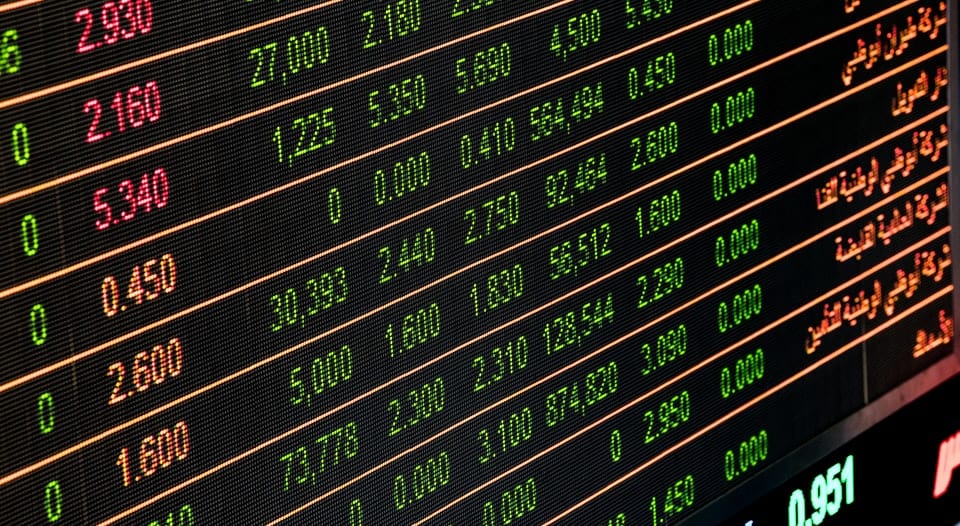
A mere nine days ago on February 19, 2020, the S&P 500 (the leading US stock market index) reached an all-time high. Since then the index has dropped about 13%, which qualifies as a “correction” (a 10% drop) and is two-thirds of the way to bear market territory (a 20% drop).
Coronavirus and the Stock Market
The decline appears almost entirely due to rising concerns about the worldwide spread of the coronavirus. Those concerns likely have two components.
First, there is the economic impact—a wide swath of economic activity would likely be hurt by a pandemic. The resulting hit to corporate earnings translates into lower stock prices. The market decline we’re seeing is a rational response to this risk.
Second, there is the psychological aspect. It’s perfectly reasonable to worry about widespread illness and disruptions in our daily living.
Faced with risk we can’t control, there is an understandable desire to reduce risk where we can. Thoughts naturally turn to our investment portfolios.
Making Sense of Things Amidst Uncertainty
Maybe our most important job as your investment advisor is to provide sound counsel in moments like this. We’ve seen many crises over the decades. Each has its unique characteristics, and that’s certainly the case here. Without clear precedents on which to rely, we still must find a path to good advice.
There’s so much we don’t know right now. How many people will be infected? What is the true severity of the illness? How long will the outbreak last? Will warmer weather reduce transmission? How much will consumers cut back spending in response? How will manufacturing and delivery be impeded? How will the health care system respond? How will treatment regimens evolve? Will there be a vaccine and how soon? And how will investors react once we know the answers to all these questions?
In the face of so many unknowns, we must focus on what we know, or at least what we think we know.
- A coronavirus pandemic would be akin to a global natural disaster, like a hurricane or earthquake that hits the whole world at once.
- Natural disasters have a large and immediate negative impact on economic activity. The duration of the impact depends on the nature of the disaster, but afterwards recovery is steady and often rapid.
- A coronavirus pandemic would levy its toll on the victims and their families and friends. But it would not mark the end of either civilization or the capital markets as we know them.
- Consequently, in the event of pandemic, we can expect that economies and markets will eventually recover, though the timeframe of such recovery remains uncertain.
Market Timing – Maybe the Greater Risk
We understand the temptation to sell stocks now in hopes of sidestepping further decline. The problem is that in so doing, one is trying to time the market, a job that seemingly no one does well.
Take as an example the more than 50% decline in the US stock market from October 2007 to March 2009. Some investors managed to sell their stocks in 2008, well ahead of the lows reached in 2009. But we know of almost no investor who repurchased before or at the 2009 low point. Why? Because there was absolutely no indication at the time that March 2009 marked the low. Instead, fear levels were near all-time highs at what was—only with the benefit of hindsight—the bear market’s end.
Over time, fear subsided and some who had sold their stocks tiptoed back into the market. Others who were paralyzed between two fears--a resumed downturn on one hand and missing the next bull market on the other—did nothing at all and remained uninvested through one of the greatest bull markets in history. Almost everyone who sold in 2008 (and thereby avoided the subsequent decline to the 2009 lows) repurchased their stocks at a higher price than the level at which they sold in 2008, or they failed to get back in at all.
In other words, even managing to sell well before the market bottom ultimately caused these investors to forego substantial gains. And for those who realized capital gains on their stock sales, the resulting taxes only added to the cost of their market timing.
Asset Allocation is Key
In the end, we always return to asset allocation. Why allocate some portion of your portfolio to stocks? Because in the long run, stocks have vastly outperformed safer alternatives like cash and bonds.1 So why not allocate all your portfolio to stocks? Because almost no one wants the entirety of their liquid assets subject to the market’s occasional traumatic volatility like that we are experiencing today.
The trick, then, is finding the right balance between stocks and bonds—between long-term growth and short-term stability. Investors vary in their portfolio size, time horizon, growth needs, and risk tolerance. As a result, the right asset allocation varies by investor and, for a single investor, may also vary as one gets older.
Our goal always is to see that each client has the right asset allocation. The right asset allocation is the one that enables you to stay the course through even very volatile times.
We’re Here to Help
We recognize that staying the course is much easier said than done right now. There’s an emotional component that transcends the data and what may be rational. One of the greatest values we can bring to our relationship with you is to help you through times like this, when the daily news is alarming and repeatedly challenges one’s confidence.
If the stock market is keeping you awake at night, please pick up the phone or email us and we’ll talk it through. Together we’ll make sure you remain on the right course to meet your long-term goals.